Start with the people who know most
Most laser eye surgeonshave not had laser eye surgery.
In 2015, four refractive surgeons surveyed 250 of their own colleagues for the Journal of Cataract & Refractive Surgery. Almost all of them replied — a 99.2% response rate.
Among the 161 surgeons who had a correctable prescription, 67 chose laser vision correction and 94 did not.
A 501(c)(3) nonprofitWe sell nothing and take no industry money. Donations fund this site.
An unpaid boardEvery board member was harmed by elective eye surgery.
Checkable claimsEvery figure below links to its primary source.
Each dot is one practising refractive surgeon. The filled dots are the ones who have had laser vision correction on their own eyes.
28.9%
of the 232 practising refractive surgeons surveyed had had laser vision correction on their own eyes — 67 of the 232.
Not all of them needed it: 71 had no refractive error to correct. So take the fairer denominator. Among the 161 surgeons who did have a correctable prescription, 67 chose the surgery and 94 did not.
Of those 161, 54 said they were not candidates at all. The two most common reasons, tied, were a prescription outside FDA approval and dry eyes. A further 107 considered themselves eligible — and 40 of them still said no.
Asked why they had declined, 37 of those 40 surgeons gave the same answer: they simply prefer to wear glasses or contact lenses. Two cited fear of complications. One was waiting for a different technology.
Kezirian GM, Parkhurst GD, Brinton JP, Norden RA. Prevalence of laser vision correction in ophthalmologists who perform refractive surgery. J Cataract Refract Surg. 2015;41(9):1826–1832.A quick check-in
After reading this, where do you stand on LASIK?
Choose the answer that best describes your plans now.
We measure the selected option and survey placement. No name, email, or sign-up is requested.
Answer submitted
Your answer has been recorded.
Keep scrolling. Next, see how the surgeons who chose the procedure rated their own results.
What the same study found in the other direction
This survey was designed, funded, run and published by refractive surgeons in their own journal. It was not written to discourage anyone. It reported that 97% of the 67 surgeons who had the procedure said they were better off for it, and that 98.6% of the surgeons who answered recommend it to adult members of their own family. Both of those things are true, and we are not going to pretend otherwise.
But “better off” is a low bar. The study asked a sharper question too, and all 67 answered it. Here is how they rated their own results.
- 55 completely satisfied 82.1%
- 10 only “mostly satisfied” 14.9%
- 1 neutral 1.5%
- 1 completely dissatisfied 1.5%
So nearly one in five of the surgeons who chose this operation for their own eyes — 12 of 67 — were less than completely satisfied with the result. Asked what was wrong: half were unhappy with the refractive outcome, a quarter reported corneal complications, and a quarter were unhappy with their quality of vision. The one who was completely dissatisfied had developed corneal ectasia, the bulging and weakening of the cornea that can end in a transplant.
Among the surgeons who were eligible for the procedure they perform for a living, nearly four in ten chose not to have it and almost every one of them gave the same reason. They would rather wear glasses.
Source: Kezirian et al., J Cataract Refract Surg 2015;41(9):1826–1832. Figures as reported: 232 qualifying respondents, 161 with a treatable refractive error, 107 self-identified candidates, 67 who had the procedure, 40 eligible decliners. Satisfaction: 55 completely satisfied, 10 mostly satisfied, 1 neutral, 1 completely dissatisfied; of the 12 who were less than completely satisfied, 6 cited the refractive outcome, 3 corneal complications and 3 visual quality.
02 · What the chart cannot show
Two eyes can both read 20/20.Only one of them can drive at night.
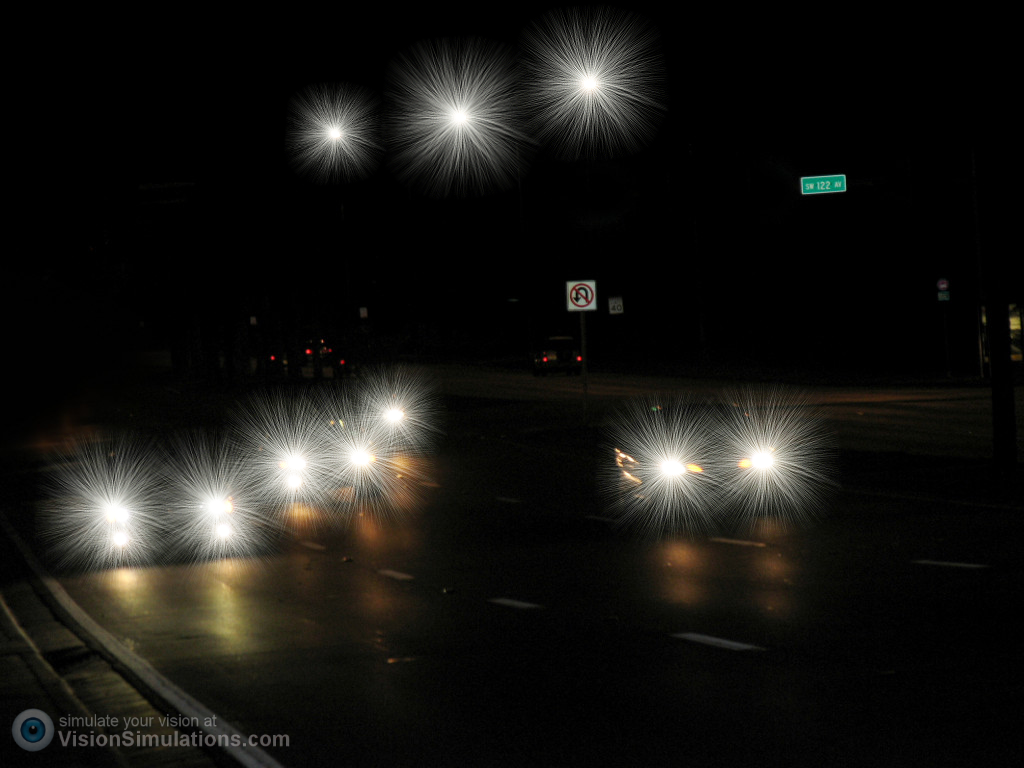
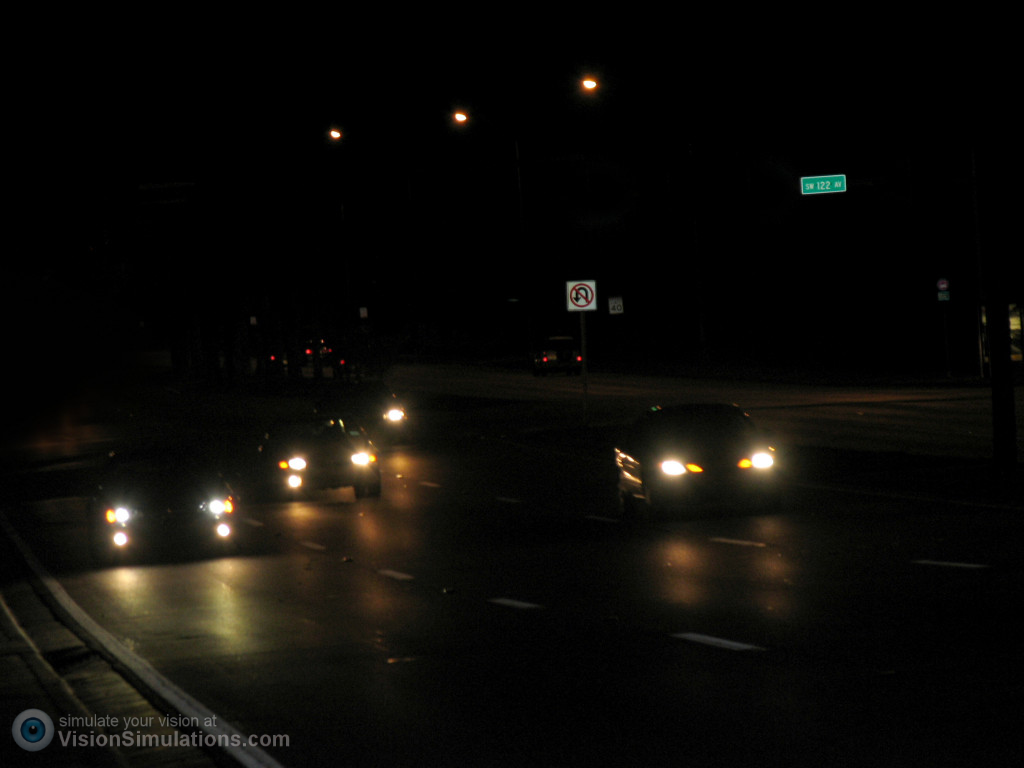
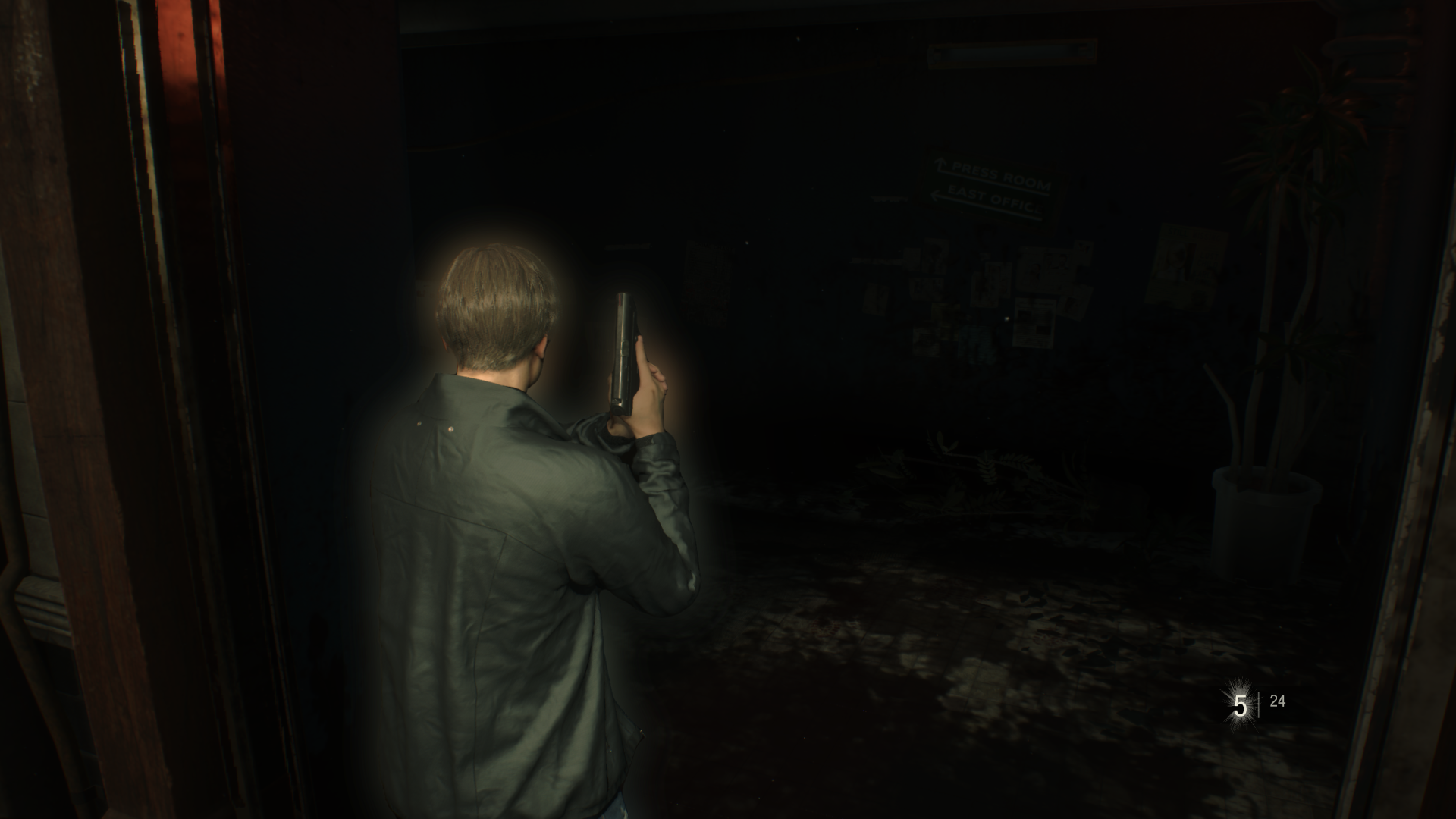
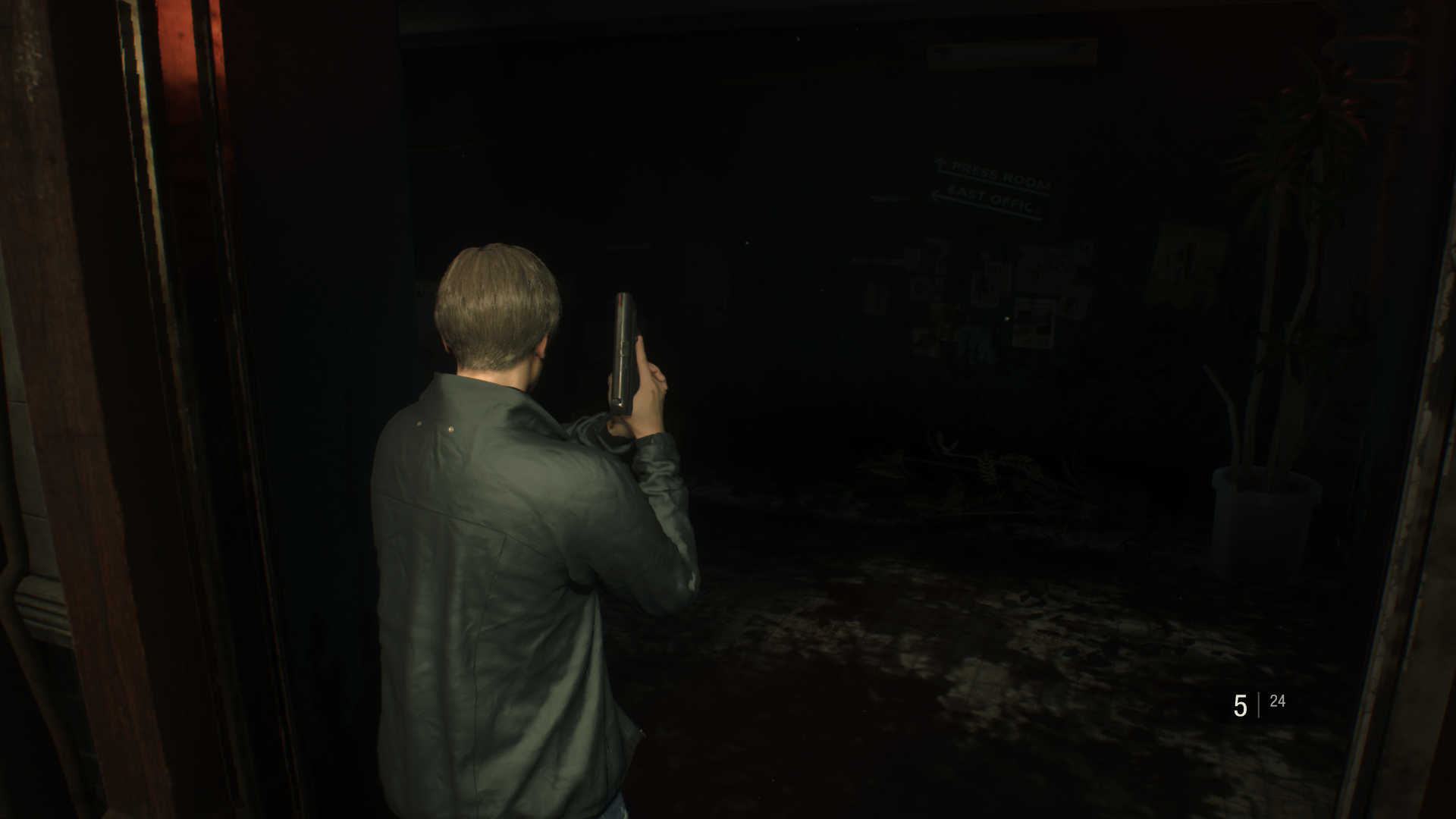
Visual acuity is measured on a high-contrast chart in a well-lit room. Most of what people lose after refractive surgery is invisible to that test: contrast, glare tolerance, and bright objects or subtitles appearing crisp on a dark background instead of surrounded by a fuzzy halo effect.
Up to 46%
reported a new visual symptom three months after LASIK.
Among FDA PROWL participants who had no visual symptoms at all before surgery. Halos were the most common.
Up to 28%
reported new dry-eye symptoms three months after LASIK.
Among PROWL participants who had no dry-eye symptoms before surgery. This is a different baseline group.
39.4%
reported starbursts across pooled post-LASIK studies.
From 11 studies covering 5,637 eyes. Glare was reported by 28.2%, and night-driving difficulty by 15.5%.
These are different groups answering different questions at different times, so they cannot be added together. Sources: FDA LASIK Quality of Life Collaboration Project (PROWL) — “up to” reflects the range across its two studies — and Susanna et al., J Refract Surg 2025;41(4):e391–e403. Full detail on our sources page.
Why it happens in the dark
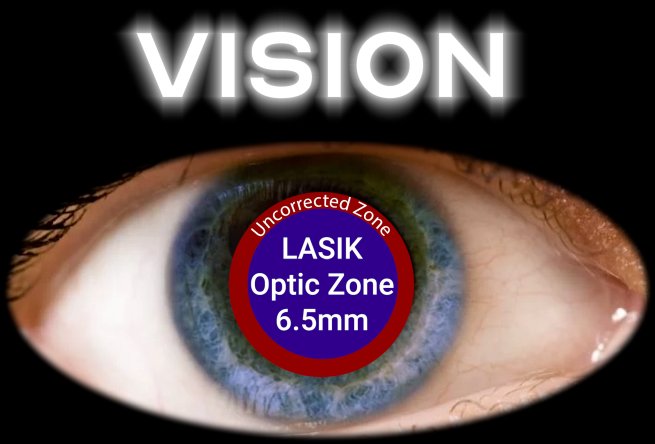
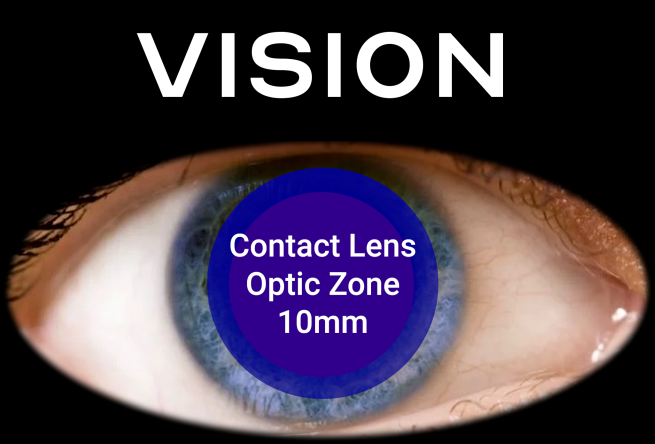
Your pupil opens wider at night — commonly to 7–9 mm. The zone the laser reshapes is typically 5.5–6.5 mm, and the effective zone after healing is often smaller still.
Light entering through the untreated rim outside that zone is focused differently from light through the middle. That mismatch is what produces halos, starbursts and washed-out contrast — and it is why an eye can score 20/20 in a bright room and still struggle on a dark road.
Ask your optometrist to measure your fully dark-adapted pupil and compare it with the planned optical zone. Background and measurements in our suggested reading.
03 · What the regulator tells you to consider
The FDA’s own checklist warns that LASIK can cause permanent harm.
This is not an advocacy claim. It is the list the FDA publishes for prospective patients, on its own website, today.
Before agreeing to LASIK, the FDA says to consider:
- Permanent loss of vision, or blindness
- Chronic dry eye, even with no dry eye beforehand
- Glare, halos, starbursts and difficult night driving
- Significantly reduced vision in dim light
- Results that may not last
- Unknown long-term results
Source: FDA LASIK Surgery Checklist, under “Know all the risks and procedure limitations.” Read the warnings at the top of that page; later sections move on to choosing a surgeon and should not be mistaken for evidence that surgery is right for you.
Read what the draft guidance says →In 2022 the FDA proposed new patient labeling for LASIK devices, after hearing from patients who said they had not been told the risks. Nearly 300 of those people filed comments on the public record.
FDA: When LASIK is not for me →The FDA also warns that having both eyes treated on the same day is riskier than two separate surgeries, and that people who play contact sports are poor candidates because the corneal flap remains vulnerable.
After reading the FDA warnings
After reading this, where do you stand on LASIK?
Choose the answer that best describes your plans now.
We measure the selected option and survey placement. No name, email, or sign-up is requested.
Answer submitted
Your answer has been recorded.
Keep scrolling. The next section covers what happens years later.
04 · The part the brochure skips
The change is irreversible.The correction is not permanent.
Those two sentences sound contradictory, and that is exactly the problem. The tissue removed never comes back, but the prescription it was cut to correct keeps moving.
20.8%
of eyes needed a second operation within 10 years.
In a 10-year follow-up of 97 eyes treated for myopia up to 10 D, one in five was retreated for over-correction, under-correction or regression. Myopia crept back at an average of 0.12 D per year.
43.6%
of eyes could still see 20/25 or better without glasses at 15 years.
In the longest follow-up published, fewer than half of treated eyes still met that standard, and 46.2% were within 1.00 D of the result they were aimed at.
Read this one carefully: these were 40 eyes with high myopia (−6 to −18 D), treated in the 1990s on a Visx 20/20 laser with small 4.5–6.0 mm zones. It is not a forecast for a modern low myope. It is evidence that results move over a lifetime. Alió et al., JCRS 2015;41:33–40.
2.4%
of normal corneal strength at the centre of a healed LASIK flap.
The flap is a permanent wound that never fully bonds. It can be lifted, or knocked loose by trauma, for the rest of your life — displacement has been documented more than two decades after surgery.
Source: Schmack et al., J Refract Surg 2005;21(5):433–445. See also flap complications.
Cataract surgery gets harder afterwards.
Like everyone else, you will very likely need cataract surgery one day. Calculating the right replacement lens power is materially less accurate in an eye that has had LASIK, which raises the chance of a disappointing result or a repeat operation.
LASIK also distorts eye-pressure readings, which can delay a glaucoma diagnosis.
More on cataract surgery after LASIK.
The comparison that actually matters
The choice is usually presented as glasses versus no glasses. That is not the choice. Because acuity drifts back and reading glasses arrive in your forties regardless, the honest comparison is glasses now against possibly glasses later anyway, on a cornea that has been permanently thinned and cut.
Contact lenses and glasses carry their own limitations and, in the case of lenses, their own small risks. But neither one removes tissue you cannot put back.
05 · On the federal record
These are not online reviews.They are comments filed with the FDA.
When the FDA opened its 2022 draft guidance for public comment, people who had been harmed wrote in. Each comment below carries a docket number you can look up yourself on regulations.gov.
And one from inside the industry
A former employee of LASIK surgeons also filed a comment on the same docket. On the marketing:
“…was told ‘this procedure has a 99% success rate.’ This statement is technically true because success is determined by the surgeon, not the patient.”
The same commenter estimated that of roughly 5,600 patients they saw, 10–15% had severe issues following LASIK. Comment FDA-2022-D-1253-0607.These are individual accounts, not a representative sample, and they cannot tell you how common any outcome is — no one can, because there is no national registry of LASIK complications. They are here because they are on the public record and because the FDA cited this kind of feedback as its reason for proposing stronger patient labeling.
Last question, and thank you for reading
After reading this, where do you stand on LASIK?
Choose the answer that best describes your plans now.
We measure the selected option and survey placement. No name, email, or sign-up is requested.
Answer submitted
Your answer has been recorded.
Thank you. Here is where to read more before you decide.
The safest deadline is no deadline.
LASIK is elective. Nothing gets worse if you wait, and no promotional price is worth an irreversible decision made on a schedule set by the seller. If you want a medical opinion, get it from a clinician who neither performs nor refers patients for refractive surgery — a consultation at a LASIK clinic is not a second opinion.
Vision Advocacy is a 501(c)(3) nonprofit run by unpaid volunteers who were harmed by elective eye surgery. This page is general educational information, not medical advice, and we are not a medical provider. Discuss your own health and treatment options with a qualified professional.